There are no items in your cart
Add More
Add More
| Item Details | Price | ||
|---|---|---|---|
The short answer is a resounding yes — and here's exactly how students from arts, commerce, medicine, and every other field are doing it right now.
Every week, thousands of students from backgrounds in fine arts, commerce, biology, law, and journalism are asking the same question: Is AI only for computer science graduates?
The myth that Artificial Intelligence belongs exclusively to IT engineers is one of the biggest misconceptions holding people back in 2025. The reality? Some of the most innovative AI practitioners today come from psychology, design, healthcare, and business — fields that bring a completely different — and often more powerful — perspective to AI.
This article breaks down the truth, the tools, and the practical roadmap for any non-IT student who wants to learn, apply, and thrive in the world of AI.

"AI is not just a technology — it is a new way of thinking. And thinking is a skill every student already has."
Let's address this head-on. Yes, building AI from scratch requires mathematics and programming. But using, applying, and directing AI does not. Today, a massive portion of AI work falls into categories that require zero code:
Writing effective instructions for AI tools like ChatGPT, Midjourney, or Gemini. Pure language skill.
Evaluating bias, fairness, and governance. Law and philosophy students are perfect for this.
Using AI to create, optimize, and distribute content at scale. A marketer's superpower.
Applying AI diagnostics tools, patient management systems, and clinical decision support.
Advising businesses on how to adopt and integrate AI. MBA and commerce students excel here.
Here's something the tech industry is finally admitting: pure coders often struggle with the human side of AI. They can build the model, but they don't always understand the patient, the customer, the student, or the citizen who will be affected by it.
This is where non-IT students shine. Consider what different fields bring to the table:
Deep understanding of narrative, culture, and human emotion — essential for AI content, UX, and ethics.
Business strategy, financial modeling, and market sense — perfect for AI product and consulting roles.
Domain expertise that AI desperately needs to build reliable models in health, biology, and research.
Regulatory thinking and policy skills — the most needed skill as AI governance becomes law.
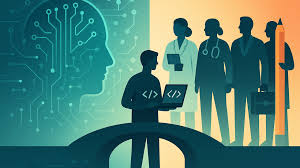
You don't need to become a machine learning engineer. You need to become AI-literate in your own field. Here's a step-by-step path that works for any background:
Learn what AI is, how it works at a conceptual level, and what it can and cannot do. Free resources: Google's "AI for Everyone" and Andrew Ng's Coursera course. No math required.
A medical student explores AI diagnostic apps. A commerce student masters AI finance tools. A designer uses Midjourney and Adobe Firefly. Start where you already are.
This is the most valuable skill for any non-coder. Learning to communicate clearly with AI tools is a craft — and it dramatically multiplies your productivity.
Create one real project using AI in your domain. A business plan co-written with ChatGPT. A medical summary tool. An AI-assisted art portfolio. Proof of work beats certificates.
If you want to go further, Python is beginner-friendly and opens doors to data analysis, automation, and custom AI workflows. Many non-IT learners pick it up in 2–3 months.
Priya, Psychology Graduate (Pune): Started using AI to analyze patient feedback patterns. Now works as an AI UX researcher for a mental health startup — with zero coding background.
Rohan, B.Com Student (Mumbai): Used ChatGPT and Excel AI tools to automate financial reporting. Landed an internship at a fintech firm by showcasing his AI-built portfolio.
Anjali, Journalism Student (Delhi): Mastered AI tools for research, fact-checking, and content creation. Now freelances as an AI content strategist earning more than many IT graduates.
These are not exceptions. This is the new normal for students who choose to act early.
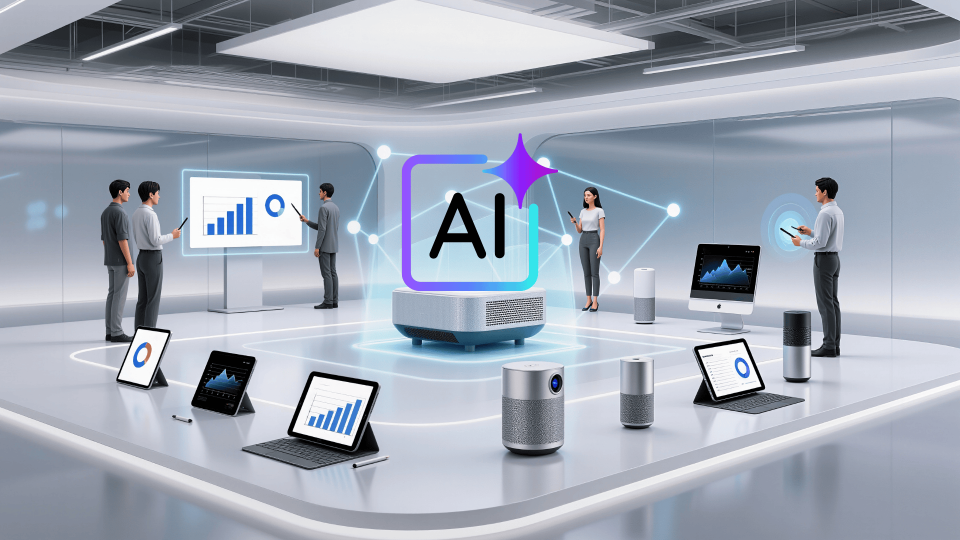
The fear of missing out on AI is real — but there's good news: the window is still wide open. AI adoption in most industries is still in early stages. A student who starts learning today will be among the first wave of domain experts with AI skills in their field.
The danger isn't not knowing how to code. The danger is waiting too long to start. Every month you delay is a month someone else builds the experience that employers and clients will pay for.
"You don't need to build AI. You need to know how to work with it — and that skill is available to absolutely everyone."
The most transformative AI applications of the next decade won't come from engineers alone. They'll come from doctors who understand what patients need, teachers who know how children learn, and artists who understand what moves people — all of them equipped with AI skills layered on top of their domain expertise.
If you're a non-IT student wondering whether AI is for you: it absolutely is. The question isn't whether you can learn it — the question is how soon you'll start.
And the best time to start is today.
Join thousands of non-IT students learning AI skills that are relevant, affordable, and built for the real world.
Explore Affordable AI Courses → Launch your Graphy