There are no items in your cart
Add More
Add More
| Item Details | Price | ||
|---|---|---|---|
This isn't a "tech industry" story anymore. AI has quietly moved into hospitals, courtrooms, farms, kitchens, and classrooms — and the students who notice first are the ones who'll have options later.
A decade ago, "AI will change everything" was a slide in a tech keynote. Today it's a line item in hospital budgets, law firm software, farm equipment, and your local supermarket's restocking system. The change isn't coming — it's already mid-rollout, and most students are still preparing for a job market that no longer exists in its old form.
That doesn't mean panic. It means precision. The students who win in the next five years aren't the ones who fear AI or the ones who blindly trust it — they're the ones who understand exactly where it's changing the rules in their field, and what skill that creates demand for. Let's go industry by industry, then talk about exactly what to do about it.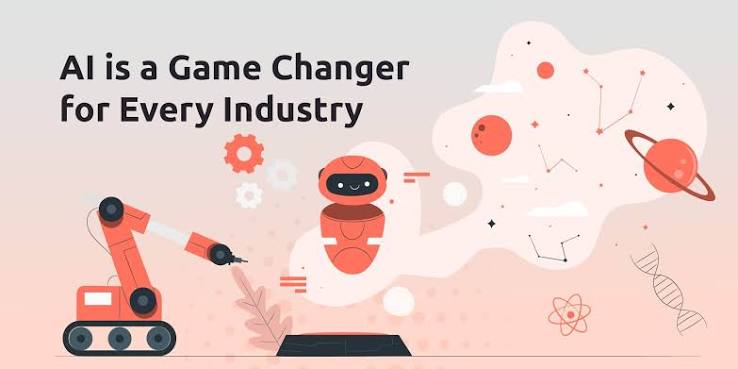
01 /
Where AI Has Already Taken Root
This isn't a future-tense list. Every one of these is already operating at scale.
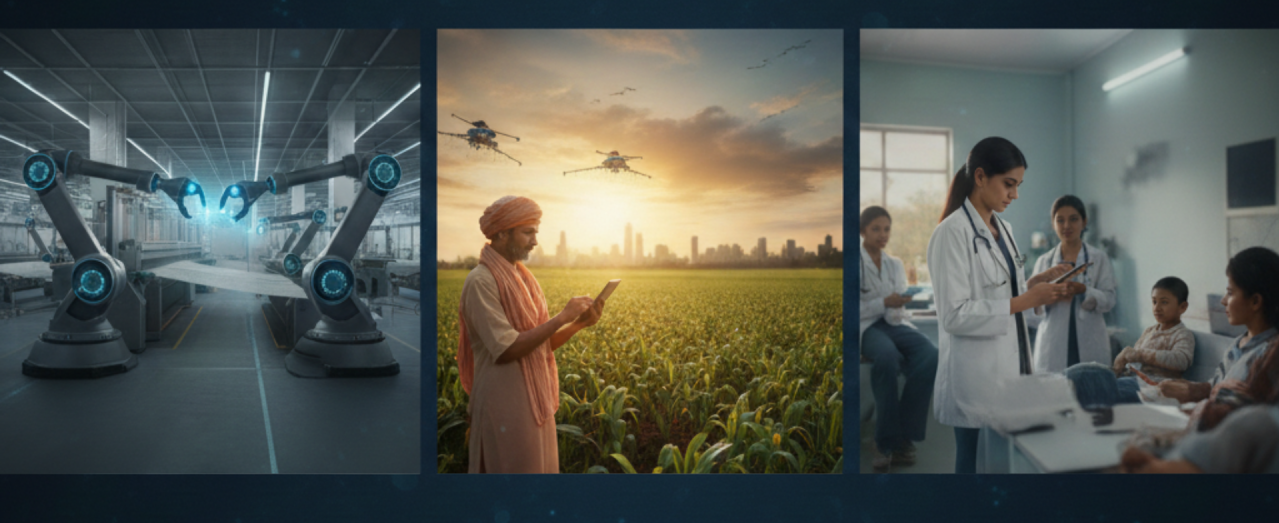
AI models now flag tumors in scans faster than radiologists can finish their coffee, predict patient deterioration hours before symptoms show, and draft clinical notes so doctors spend more time with patients and less time typing.
Contract review that took junior associates a full day now takes minutes. AI drafts first-pass briefs, flags risky clauses, and searches case law instantly — shifting lawyers from document-hunters to judgment-makers.
Fraud detection, credit scoring, and algorithmic trading run on models that read patterns no human team could track in real time. Entry-level analyst work is shrinking; the demand is shifting to people who can build and audit those models.
Drones and computer vision now spot crop disease before it spreads, and AI-driven irrigation cuts water waste on a scale that used to need a full agronomy team to manage manually.
Recommendation engines, demand forecasting, and AI-run customer support are now the default backbone of online retail — not an add-on, but the system the business runs on.
Predictive maintenance now tells a factory which machine will fail next week, not after it breaks down. Quality checks that needed a human eye on every unit are increasingly done by a camera and a model.
Personalized tutoring, automated grading, and adaptive learning paths mean two students in the same class can now get genuinely different instruction — built around what each of them is actually stuck on.
"The industries aren't being replaced by AI. The job descriptions inside them are being rewritten — and most students haven't seen the new draft yet."
Every generation hears "technology will change your career." What makes this round different is speed and breadth at the same time. Past shifts — the internet, mobile, cloud computing — usually transformed one layer of how an industry worked. AI is touching the research layer, the production layer, the customer-facing layer, and the decision-making layer, often inside the same company, inside the same year.
That breadth is exactly why "I'll just avoid AI and stick to my field" isn't a real strategy anymore. There is no field left where it isn't showing up — only fields where it's showing up faster.
Not theory. Not "learn to code someday." Here is the real sequence, in order of what to do first.
A vague awareness of "ChatGPT exists" won't help you. Go find the specific tool doctors, lawyers, or marketers in your target field are already using, and learn it before your peers do.
The gap between "I took a course" and "I can build a working model from messy data" is where hiring decisions actually get made. Pick one project, finish it, and be able to explain every decision you made in it.
Every industry needs translators — people who understand both the model and the business problem. That bilingual skill is in shorter supply than raw technical talent.
"I know Python and SQL" is a sentence. "I built a model that predicted X with Y% accuracy from real data" is proof. Employers and clients hire proof.
The students winning right now aren't the most naturally gifted — they're the ones who started six months before everyone else decided it was "time to learn AI."
 04 /
04 /AI isn't a single industry's problem to solve, and it isn't a reason to panic about your degree or your major. It's a new layer that now sits underneath every industry — and the students who understand that layer, even at a practical, hands-on level, will have more doors open than the ones who wait for someone to tell them it's mandatory.
The good news: you don't need a PhD to start. You need a clear path, real practice, and someone to walk you through it without the jargon and without the $2,000 course fee gatekeeping the whole thing.
Affordable AI was built for exactly this moment — practical, mentor-led data science and AI training that doesn't assume you already know everything, and doesn't charge like you should already be an expert.
 Launch your Graphy