There are no items in your cart
Add More
Add More
| Item Details | Price | ||
|---|---|---|---|
From predicting cardiac arrests hours before they happen to cutting diagnostic errors in half — data science has quietly become one of the most powerful tools in modern medicine. Here's exactly how it works, ward by ward.
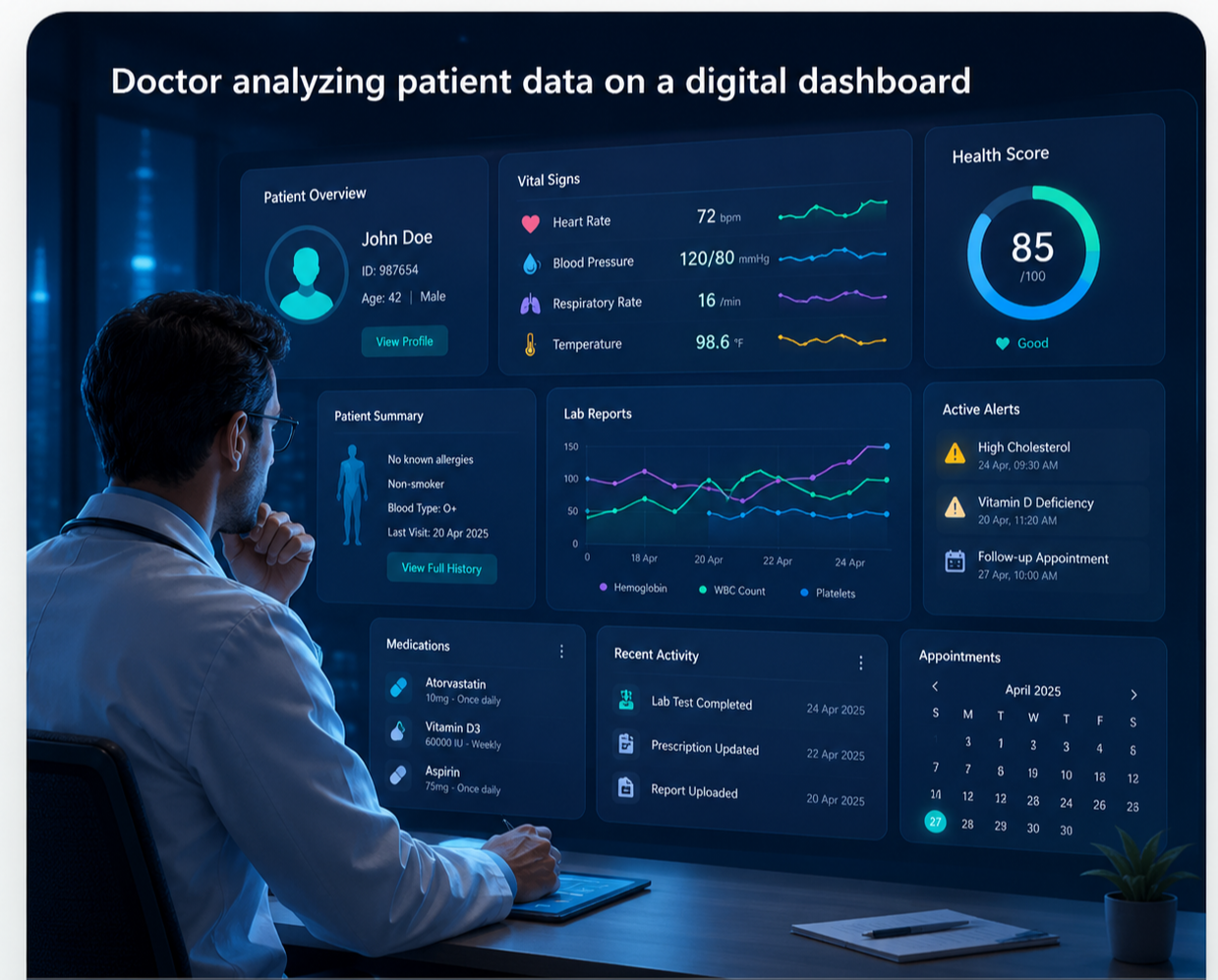
Every day, hospitals generate an overwhelming amount of information — vital signs from bedside monitors, lab results, imaging scans, medication records, and years of historical outcomes. For decades, most of this data sat unused in disconnected systems. Today, data science is turning that raw information into something far more valuable: early warnings, faster diagnoses, and smarter decisions that directly translate into lives saved.
This isn't a distant, futuristic concept — it's already happening inside ICUs, radiology departments, and hospital command centers around the world. Let's walk through exactly how.
The biggest shift data science brought to hospitals is prediction — knowing a patient is at risk before visible symptoms appear.
Machine learning models continuously scan vitals, lab values, and nursing notes to flag sepsis risk hours before clinical signs are obvious, giving care teams a critical head start on treatment.
Algorithms trained on millions of prior patient records can detect subtle deterioration patterns in heart rate variability and oxygen levels, alerting staff before a full arrest occurs.
Predictive models identify which discharged patients are most likely to return within 30 days, allowing hospitals to schedule follow-up calls and home care proactively.

Radiology produces thousands of images a day, and human fatigue means details can be missed. Data science models trained on huge image datasets now assist radiologists by flagging tumors, fractures, and internal bleeding with remarkable precision.
In stroke care specifically, AI imaging tools can detect a blood clot and alert the care team in minutes rather than the usual wait for a specialist read — and in stroke treatment, every minute of delay costs brain function.
Importantly, these systems don't replace radiologists; they act as a second set of eyes, reducing missed findings and helping prioritize the most urgent cases first.
Modern ICUs are wired with sensors — and data science is what makes sense of the flood of numbers they produce.
Centralized dashboards pull data from every bed into one view, letting a single specialist monitor dozens of critical patients simultaneously and prioritize the most urgent cases.
Connected wearables track heart rhythm, oxygen saturation, and movement even outside the hospital, feeding data back so care teams can catch problems before a patient needs to be readmitted.
Alarm fatigue is a real danger in hospitals. Data models filter out false alarms and only escalate the alerts that truly matter, so nurses aren't overwhelmed by noise.
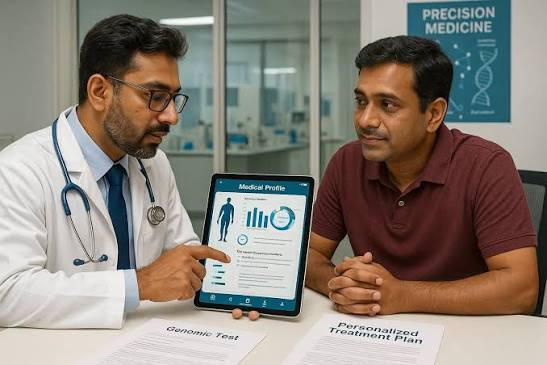
No two patients respond to treatment identically. Data science allows hospitals to combine genetic information, medical history, and real-world outcomes to recommend the therapy most likely to work for that specific person.
This is especially powerful in oncology, where treatment plans can be tailored based on a tumor's genetic markers rather than a one-size-fits-all protocol — improving outcomes while reducing exposure to treatments unlikely to help.
Pharmacogenomic models also help predict which patients might have adverse drug reactions, allowing doctors to adjust dosages before a problem occurs rather than after.
A hospital that runs efficiently is a hospital that can respond faster in an emergency. Data science plays a huge role behind the scenes.
Predictive models forecast patient inflow and discharge timing, helping hospitals allocate beds efficiently and avoid dangerous overcrowding during peak periods.
Data-driven scheduling matches staffing levels to predicted patient volume, ensuring critical departments like the ER are never understaffed during high-demand hours.
Analytics models predict usage of medication, blood units, and equipment, preventing shortages of critical supplies exactly when they're needed most.
Several major hospital systems have deployed machine learning models that scan patient data every few minutes, calculating a live sepsis risk score. When the score crosses a threshold, the care team is alerted automatically. In multiple published deployments, these systems have been linked to earlier antibiotic administration and measurably shorter hospital stays — a clear example of data science translating directly into patient outcomes.

Data science in healthcare isn't without obstacles — understanding them is part of understanding the technology.
Patient data is deeply sensitive. Hospitals must balance powerful analytics with strict compliance to regulations protecting patient confidentiality.
If historical data reflects unequal care patterns, models can unintentionally repeat those biases. Careful auditing is essential before deployment.
Many hospitals still run on older software. Connecting modern data science tools to these systems takes significant engineering effort.
For any model to save lives, doctors and nurses need to trust and understand its recommendations — which means transparency matters as much as accuracy.
What's coming next builds directly on everything above — faster, more personalized, and more preventive care.
As genome sequencing becomes cheaper, models will predict disease risk years in advance, shifting hospitals from treatment to true prevention.
Conversational AI tools will help clinicians summarize patient histories instantly, reducing administrative burden and giving more time back to patient care.
Shared, anonymized data across hospital networks will make rare-disease pattern detection and outbreak response dramatically faster.
 Launch your Graphy