There are no items in your cart
Add More
Add More
| Item Details | Price | ||
|---|---|---|---|

From empty shelves to overstocked warehouses — demand forecasting can make or break a retail business. Discover how modern retailers use Artificial Intelligence, data analytics, and machine learning to predict what customers will buy next.
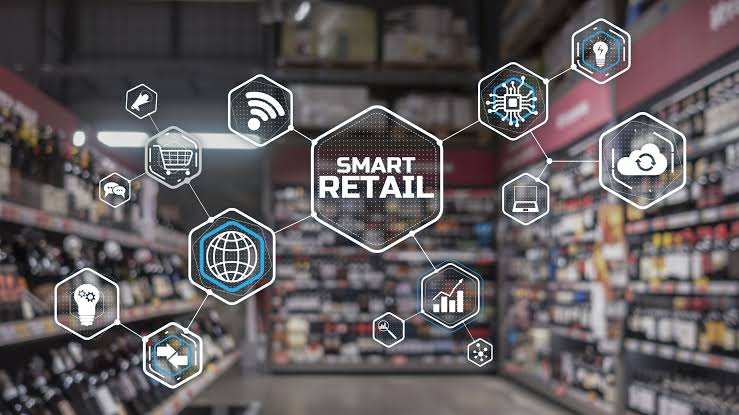
Every retail store — from a small neighborhood shop to a global supermarket chain — faces the same challenge every single day: how much stock should we order, and what will customers actually buy? Order too little, and shelves go empty. Order too much, and unsold inventory eats into profits. This is exactly why demand forecasting has become one of the most important functions in modern retail, and why it is now powered heavily by Artificial Intelligence.
Modern retail stores rely on data, not guesswork, to stock their shelves
Customer demand is never static — it changes with seasons, festivals, weather, trends, promotions, and even local events. A retailer that fails to predict these shifts either loses sales due to stockouts or wastes money storing products nobody wants. Accurate demand prediction directly impacts revenue, storage cost, staffing, and customer satisfaction.
"The retailers who understand tomorrow's demand today are the ones who win the shelf space, the customer, and the sale."
Traditionally, store owners relied on manual experience, past sales registers, and simple spreadsheets to estimate how much stock to order. This worked when business was small and predictable. But as retail scaled online and offline together, the sheer volume of data — millions of transactions, seasonal patterns, competitor pricing, weather data, and social trends — became impossible for humans to analyze manually. This is where AI and Machine Learning stepped in, turning raw data into accurate, real-time demand predictions.
AI models don't just look at last month's sales — they combine dozens of live data signals to forecast what customers will want next.
AI studies years of past sales data to detect repeating patterns, seasonal spikes, and slow-moving products.
Machine learning links weather data with product demand — like umbrella sales rising before a forecasted rainy week.
Browsing history, loyalty card purchases, and basket data help AI understand what individual customer segments prefer.
AI scans trending topics and hashtags to catch a sudden spike in demand for a product before it hits the stores.
Instead of one national number, AI predicts demand for every single store location based on local buying habits.
AI systems continuously update predictions as new sales data comes in, correcting forecasts within hours, not months.
AI demand forecasting is only as good as the data feeding it. Retailers collect and combine multiple data streams so the AI model can build a complete picture of customer behavior.
Retail brands that adopt AI-driven demand forecasting typically report measurable improvements across their supply chain and customer experience.
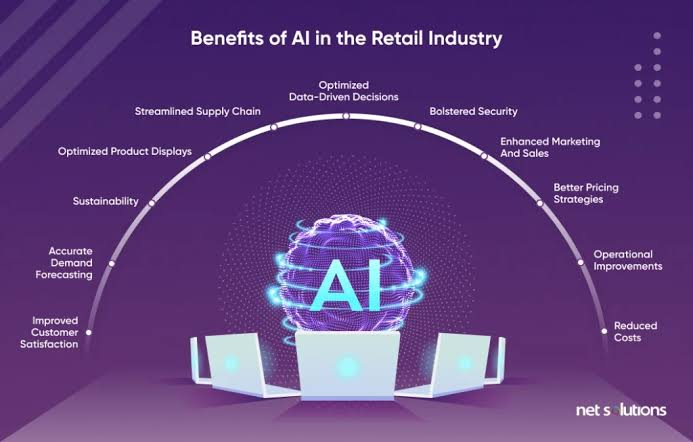
A simplified 4-step view of how retailers turn raw data into demand predictions.
Sales, weather, footfall, and online data are gathered from every channel.
AI algorithms learn patterns from historical and real-time data.
The model generates forecasts for each product, store, and time period.
Store managers use predictions to plan orders, staffing, and promotions.
As AI models keep improving, demand forecasting is becoming more precise, more personalized, and more automated. Retailers are now moving toward AI systems that not only predict demand but also automatically trigger purchase orders, adjust pricing, and personalize promotions for individual customers. Learning how these AI tools actually work — and how to apply them — is quickly becoming an essential skill for anyone working in retail, supply chain, or e-commerce.
Whether you run a store or want to build a career in AI-powered retail analytics, understanding these systems from the ground up gives you a real competitive edge.
 Launch your Graphy