There are no items in your cart
Add More
Add More
| Item Details | Price | ||
|---|---|---|---|
Why Mastering a Full Tech Stack is Your Ticket to Becoming a Job-Ready Data Scientist
Sat Jan 17, 2026
In the fast-paced world of data-driven decision-making, the role of a data scientist has evolved from a niche specialty into a powerhouse career that blends science, technology, and business acumen. But here's the truth bomb: slapping together a few machine learning algorithms from online tutorials won't cut it in today's competitive job market. To truly thrive as a full stack data scientist—someone who can handle everything from raw data ingestion to deploying intelligent models—you need a comprehensive skill set that spans programming, databases, advanced AI, and visualization tools.
If you're aspiring to join the ranks of top data professionals at companies like Google, Amazon, or cutting-edge startups, buckle up. In this post, I'll break down why learning Python, SQL, Machine Learning, Deep Learning (with a focus on CNNs), NLP, Data Engineering, PowerBI, and Generative AI is non-negotiable. And spoiler alert: partial knowledge is like building a skyscraper on sand—it might look impressive at first, but it won't hold up under real-world pressure.
Imagine trying to build a house without a hammer. That's what data science feels like without Python. As the lingua franca of the data world, Python isn't just a programming language; it's an ecosystem teeming with libraries like Pandas for data manipulation, NumPy for numerical computing, and Scikit-learn for quick prototyping. Why is it essential? In a full stack role, you'll wrangle massive datasets, automate workflows, and integrate with other tools seamlessly. Without Python proficiency, you're limited to theoretical knowledge—unable to turn insights into actionable code. Real-world example: At Netflix, data scientists use Python to personalize recommendations for millions, blending data analysis with production-level scripting. Skip this, and you're sidelined from the start.
Data doesn't live in a vacuum; it's stored in databases, and SQL (Structured Query Language) is your key to unlocking it. Whether querying relational databases like PostgreSQL or big data systems like BigQuery, SQL lets you extract, transform, and load (ETL) data efficiently. For a full stack data scientist, SQL is crucial because 80% of a project's time is spent on data preparation—not model building. Imagine interviewing for a role at a bank where fraud detection relies on real-time SQL queries; without it, you're out before you begin. It's the bridge between raw data and meaningful analysis, ensuring you can handle the "dirty work" that underpins every successful model.

Machine Learning (ML) is the heart of data science, teaching machines to learn from data patterns. But don't stop at linear regression or decision trees—dive into ensemble methods, hyperparameter tuning, and deployment strategies. Why go deep? A full stack pro must not only build models but also evaluate them for bias, scalability, and business impact. Think of Tesla's Autopilot: It's ML at scale, optimizing for safety and efficiency. Learning just a handful of algorithms? That's like knowing a few chess moves but never playing a full game—you'll get checkmated in job interviews or projects that demand robust, production-ready solutions.

Deep Learning takes ML to the next level with neural networks that mimic the human brain. Convolutional Neural Networks (CNNs), in particular, excel at image and video analysis, making them indispensable for computer vision tasks. In a full stack context, mastering CNNs means you can tackle applications like medical imaging (e.g., detecting tumors in X-rays) or autonomous driving. Companies like Meta use CNNs for content moderation on billions of posts daily. Without this, you're missing out on the explosive growth in AI-driven visuals, limiting yourself to tabular data while the world moves to multimedia intelligence.
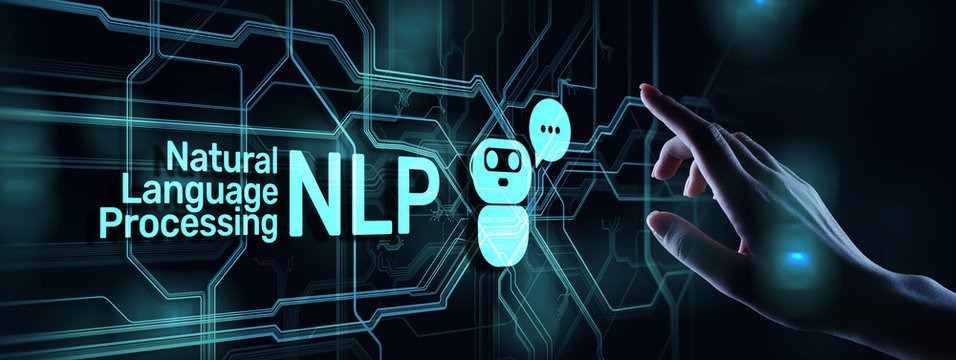
Natural Language Processing (NLP) is where AI meets linguistics, enabling machines to understand, generate, and interact with text. From sentiment analysis to chatbots, NLP powers tools like Google Translate or customer service bots. As a full stack data scientist, NLP equips you to handle unstructured data—think social media feeds or customer reviews—which constitutes 90% of the world's data. Without it, you're blind to insights from text-heavy domains like marketing or healthcare. Example: Amazon's product recommendations leverage NLP to parse reviews, boosting sales by billions.


Data Engineering is the unsung hero: building pipelines that ingest, process, and store data at scale using tools like Apache Spark or Airflow. Why critical? Full stack means end-to-end ownership. You can't just model data; you must ensure it's clean, accessible, and flowing reliably. At Spotify, data engineers architect systems that handle petabytes of streaming data for personalized playlists. Neglect this, and your fancy ML model crashes under production loads.
Data without visualization is like a story without pictures—forgettable. PowerBI, Microsoft's powerhouse tool, lets you create interactive dashboards that turn complex data into compelling narratives. For full stack mastery, it's about communication: translating models into business decisions. Executives at Fortune 500 companies rely on PowerBI reports to drive strategy. Without it, your insights gather dust in notebooks, failing to influence real change.
Generative AI, fueled by models like GPT or Stable Diffusion, creates new content—from text to images. It's revolutionizing fields like content creation and drug discovery. In a full stack role, it means innovating beyond prediction: generating synthetic data for training or automating reports. OpenAI's tools are reshaping industries; mastering this positions you as a forward-thinker, ready for AI's next wave.
Here's where many aspiring data scientists falter: They binge-watch YouTube tutorials on random forests or k-means clustering, thinking that's enough. But the job market demands versatility. According to LinkedIn's 2023 reports, top data science roles require proficiency across the entire pipeline—from data ingestion to deployment and visualization. Partial knowledge leaves gaps: You might build a model, but can you scale it? Debug pipelines? Communicate results? In interviews at tech giants, you'll face case studies testing holistic skills. Learning isolated algorithms is like memorizing vocabulary without grammar—you can't form sentences, let alone compelling stories. To be job-ready, embrace the full stack: It's the difference between hobbyist and professional.
Ready to level up? At Affordable AI, we don't just teach theory—we deliver a comprehensive, hands-on Full Stack Data Science course that covers Python, SQL, Machine Learning, Deep Learning (including CNNs), NLP, Data Engineering, PowerBI, and Generative AI. Our curriculum is designed by industry experts, with real-world projects, mentorship, and placement support to make you job-ready from day one. Whether you're a beginner or upskilling, [Institute Name] equips you with the tools to stand out. Enroll today and transform your career—because in data science, the full stack isn't optional; it's essential.

Affordable AI Nagpur
AI & Data Science Manager with 7+ years of experience
 Launch your Graphy