


There are no items in your cart
Add More
Add More
| Item Details | Price | ||
|---|---|---|---|

A deep-dive into how modern Warehouse Management Systems (WMS) work — architecture, core modules, automation, AI-driven optimization, and how to choose the right system for your operations.
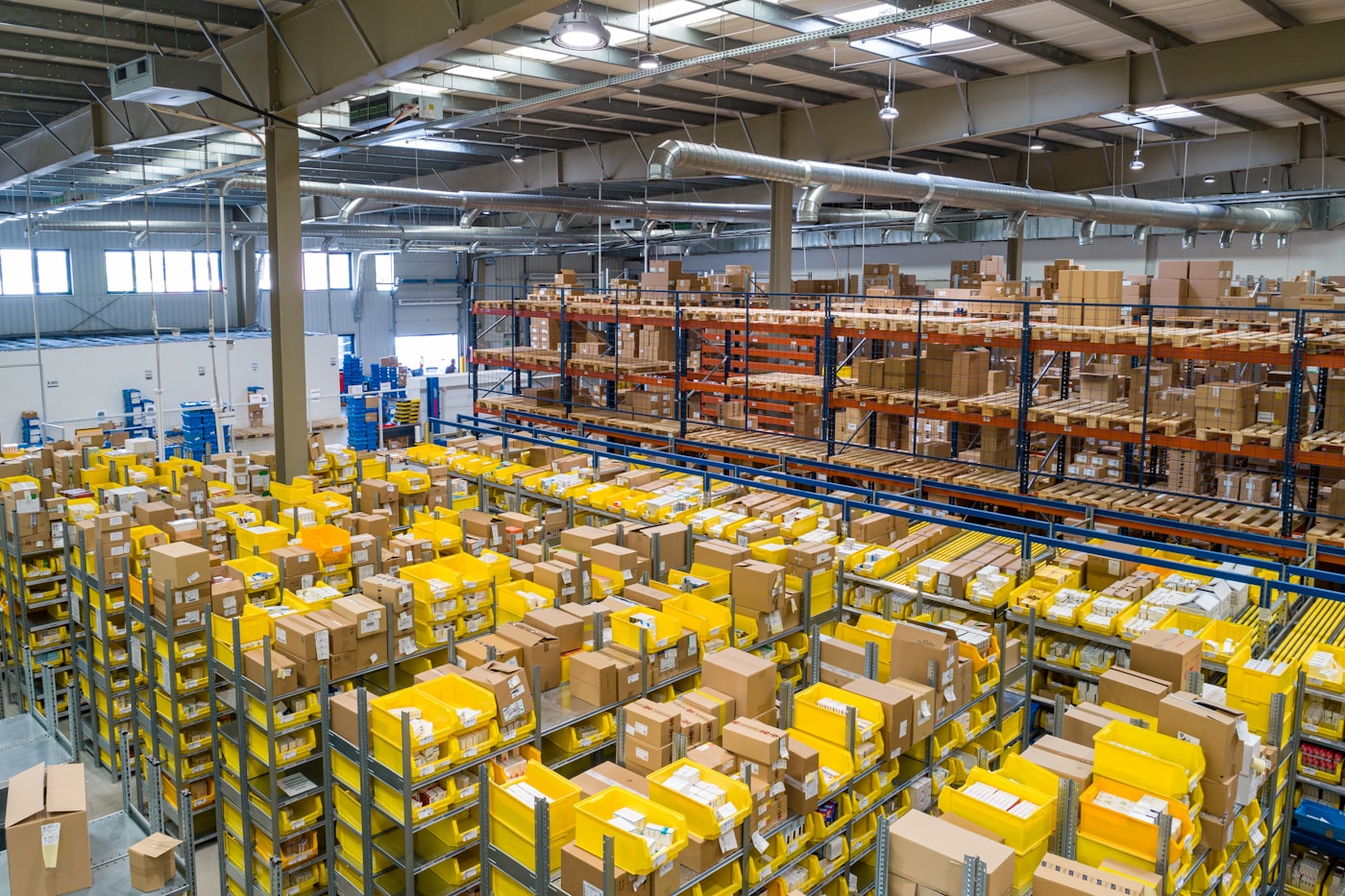
A Warehouse Management System (WMS) is a software platform that controls and optimizes every stage of warehouse operations — from the moment inventory enters a facility to the moment it leaves for delivery. It tracks stock levels in real time, directs workers and machines on where to place and pick items, and connects the physical floor to the digital supply chain through barcode scanners, RFID tags, IoT sensors, and enterprise systems like ERP and TMS.
Unlike a simple spreadsheet or basic inventory tracker, a true WMS is built around algorithms — for slotting logic, wave picking, labor optimization, and demand forecasting — making it as much a decision-engine as a record-keeping tool. Global e-commerce growth has pushed WMS adoption from a "nice-to-have" for large enterprises to a core requirement for any business handling physical inventory at scale.
Warehousing errors are expensive — mis-picks, stockouts, and inefficient labor routing directly hit customer satisfaction and margins. A well-implemented WMS addresses these problems at the operational core.
Every WMS — whether a lightweight cloud module or a full enterprise deployment — is built around a common set of functional pillars.
Automates ASN (Advance Shipping Notice) matching, quality checks, and cross-docking decisions the moment stock arrives at the dock.
Assigns SKUs to optimal storage locations based on velocity, size, and demand patterns to minimize travel time.
Maintains real-time, lot- and location-level accuracy using barcode, RFID, or IoT sensor data feeds.
Supports wave, batch, zone, and cluster picking strategies, often guided by pick-to-light or voice systems.
Validates order accuracy, calculates optimal carton sizing, and generates carrier labels and shipping manifests.
Tracks task-level productivity, builds engineered labor standards, and dynamically balances workload across shifts.
Not every business needs the same kind of WMS. Systems generally fall into four categories, each suited to a different scale and complexity of operations.
| Type | Best For | Key Trait |
|---|---|---|
| Standalone WMS | Single-site operations, SMBs | Focused purely on warehouse ops, low cost |
| Cloud-Based WMS | Growing businesses, multi-site | Fast deployment, subscription pricing, auto-updates |
| ERP-Integrated WMS | Large enterprises | Native sync with finance, procurement, sales modules |
| Best-of-Breed / 3PL WMS | 3PLs, complex multi-client warehouses | Deep configurability, multi-tenant billing & rules |
From the moment a truck arrives at the dock to the moment a package leaves for delivery, the WMS orchestrates a tightly sequenced flow of data and physical movement.
Incoming shipments are scanned and matched against purchase orders, updating inventory counts instantly.
The system assigns each item to a bin location using rules based on SKU velocity, size, and storage zone capacity.
Incoming orders are grouped into "waves" and released to the floor based on shipping cutoffs and carrier schedules.
Workers or robots follow system-optimized routes to pick items, with barcode scans confirming each pick against the order.
Orders are consolidated, verified for completeness, and packed with system-recommended carton sizes to reduce shipping cost.
The WMS generates carrier labels, shipping manifests, and updates order status across connected sales channels in real time.
Today's WMS platforms are no longer just database-driven record systems — they are increasingly powered by AI, IoT, and robotics integration layers.
Demand forecasting, dynamic slotting, and predictive replenishment models that reduce stockouts and overstock.
Real-time location tracking of pallets, bins, and equipment without manual scanning at every touchpoint.
AMRs (Autonomous Mobile Robots) and AS/RS systems that execute picking and transport tasks dispatched by the WMS.
REST APIs connecting the WMS to ERP, TMS, OMS, and e-commerce platforms for unified data flow.
Selecting a WMS is a long-term infrastructure decision. These are the factors that matter most in evaluation.
Can the system handle multi-site, multi-warehouse growth without a full re-platform?
Native connectors or open APIs for your existing ERP, e-commerce, and shipping carriers.
Licensing, implementation, hardware, and ongoing support costs — not just the sticker price.
Cloud WMS platforms typically go live in weeks; ERP-integrated systems can take months.
Even well-chosen WMS platforms fail to deliver ROI when implementation is rushed. The most common pitfalls include poor master data quality before go-live, underestimating staff training time, inadequate barcode/RFID hardware planning, and skipping a phased rollout in favor of a risky "big bang" launch across all warehouses at once.
Successful rollouts typically pilot the WMS in a single zone or warehouse first, validate accuracy and throughput metrics, and only then scale horizontally — mirroring good practice in any large-scale software deployment.
The next generation of WMS platforms is moving from rule-based logic to AI-native decision-making — systems that continuously learn optimal slotting and picking strategies from historical data, predict equipment maintenance needs before failures occur, and dynamically re-route tasks in real time as robots, humans, and inventory conditions change on the floor. For businesses building AI-powered products, warehouse and supply chain optimization remains one of the highest-ROI applications of applied machine learning today.
 Launch your Graphy